
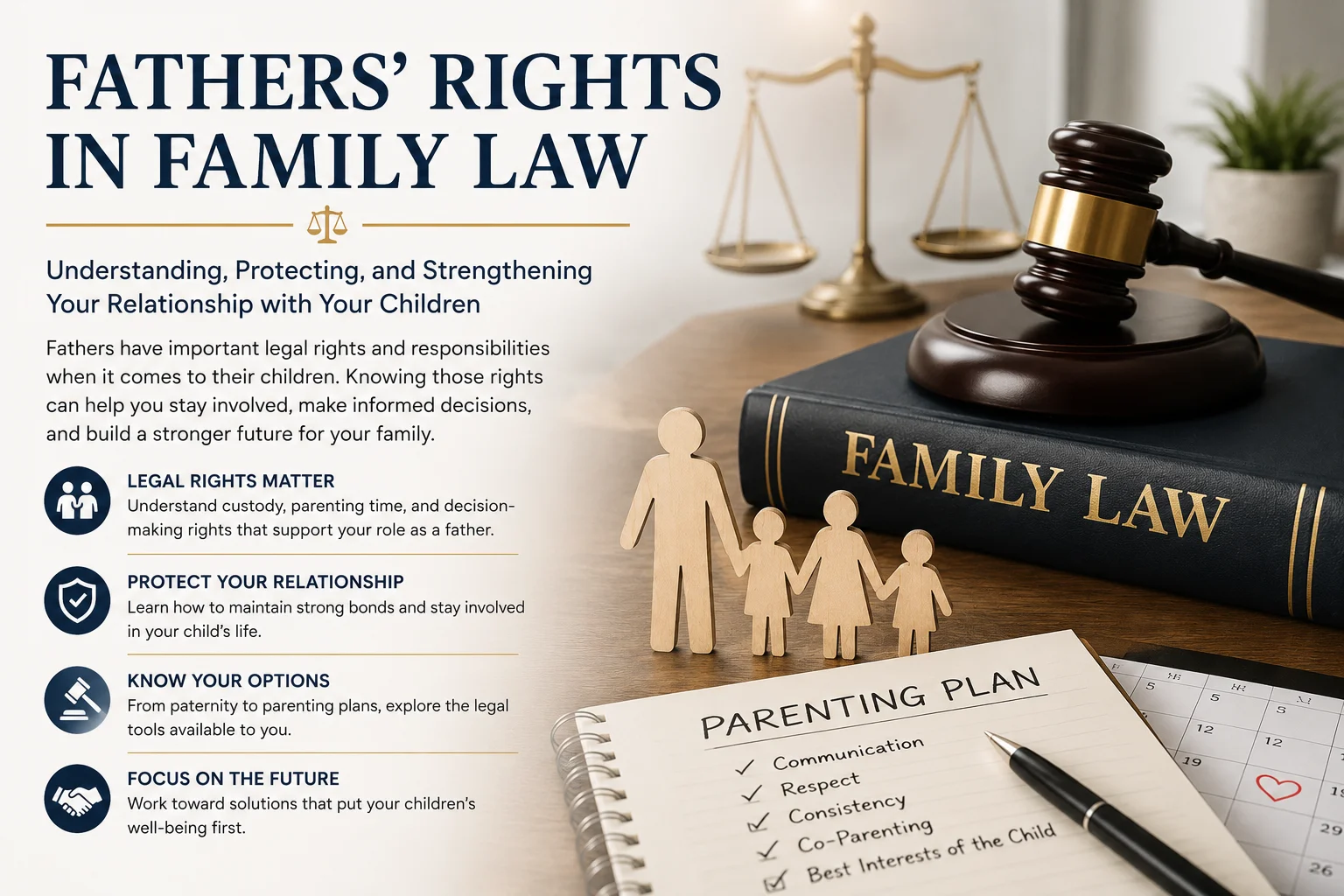
Understanding Fathers’ Rights in Family Law: What Every Parent Should Know
Family law cases are often emotional, especially when children are involved. While many people assume that mothers automatically have stronger legal standing in custody matters, modern family courts are generally guided by the principle of serving the child’s best interests rather than favoring one parent over the other. As a result, fathers have important legal rights and responsibilities that deserve equal attention.
Understanding those rights can make a significant difference during divorce, separation, custody disputes, or paternity proceedings. Learning about the legal process early helps parents make informed decisions, protect their relationship with their children, and avoid unnecessary conflicts.
The Evolution of Fathers’ Rights
Over the past several decades, family law has evolved considerably. Courts have increasingly recognized that children benefit from having healthy, meaningful relationships with both parents whenever possible. This shift has encouraged more balanced approaches to custody, parenting time, and parental decision-making.
Today, fathers who actively participate in their children’s lives often seek shared parenting arrangements that allow them to remain involved in education, healthcare decisions, extracurricular activities, and everyday parenting responsibilities.
Legal systems continue to emphasize that parenting decisions should focus on the child’s welfare instead of relying on outdated assumptions about gender roles.
Why Legal Rights Matter?
Many fathers are surprised to learn that certain legal rights may depend on establishing paternity or obtaining court orders rather than informal agreements between parents.
Without clear legal documentation, disagreements can become difficult to resolve. Court-approved parenting plans help clarify expectations regarding:
- Parenting schedules
- Holiday arrangements
- School decisions
- Medical care
- Financial responsibilities
- Communication between parents
Having legally recognized parental rights also helps ensure that both parents can participate in important decisions affecting their children’s future.
Establishing Paternity
For unmarried parents, establishing legal paternity is often the first step toward protecting parental rights.
Paternity can usually be established through:
- Voluntary acknowledgment by both parents
- Genetic testing
- Court proceedings
Once paternity is legally recognized, fathers may pursue custody, visitation, or shared parental responsibilities while also accepting legal obligations such as child support.
Without establishing paternity, fathers may face unnecessary obstacles when trying to exercise their parental rights.
Understanding Child Custody
Child custody generally includes two major components:
Legal Custody
Legal custody refers to the authority to make important decisions regarding a child’s:
- Education
- Healthcare
- Religious upbringing
- General welfare
Parents may share legal custody even if the child primarily lives with one parent.
Physical Custody
Physical custody determines where the child lives and how parenting time is divided.
Depending on the family’s circumstances, custody arrangements may include:
- Joint physical custody
- Primary custody with one parent
- Equal parenting schedules
- Customized parenting plans
Every family is different, so courts often encourage flexible arrangements that support children’s emotional and developmental needs.
The Importance of Parenting Time
Children generally benefit from maintaining consistent relationships with both parents whenever it is safe and appropriate.
Parenting time provides opportunities for fathers to:
- Build emotional bonds
- Participate in daily routines
- Attend school activities
- Support academic success
- Encourage healthy development
- Maintain family traditions
Regular involvement helps children develop stability, confidence, and stronger family connections.
When disagreements arise, formal parenting plans often reduce misunderstandings by clearly outlining schedules and responsibilities.
Communication Between Co-Parents
Successful co-parenting requires respectful communication, even when parents no longer have a personal relationship.
Helpful communication practices include:
- Keeping conversations child-focused
- Remaining respectful during disagreements
- Following agreed schedules
- Documenting important discussions
- Sharing medical and school updates promptly
- Avoiding conflicts in front of children
Healthy communication often leads to smoother parenting arrangements and fewer legal disputes.
When Custody Orders Need Modification?
Family situations naturally change over time.
Parents may need to request modifications when circumstances significantly change, such as:
- Relocation
- Employment changes
- Changes in school schedules
- Medical concerns
- Safety issues
- Children’s evolving needs
Courts generally review whether proposed modifications continue serving the child’s best interests before approving changes.
Following legal procedures is important rather than making informal changes that could later create disputes.
Fathers and Child Support
Child support and custody are separate legal issues.
Receiving or paying child support does not automatically determine custody or parenting time.
Instead, child support typically considers factors such as:
- Income
- Parenting schedule
- Children’s needs
- Medical expenses
- Childcare costs
Parents should continue following court orders even if disagreements arise regarding financial matters.
Protecting the Parent-Child Relationship
Strong parent-child relationships are built through consistency rather than occasional visits.
Fathers can strengthen these relationships by:
- Attending school events
- Helping with homework
- Maintaining regular communication
- Participating in extracurricular activities
- Celebrating milestones
- Providing emotional support
- Being dependable
Courts often recognize consistent involvement as an important factor when evaluating parenting arrangements.
Keeping Accurate Records
Good documentation can help resolve misunderstandings before they become larger disputes.
Useful records may include:
- Parenting schedules
- School communications
- Medical appointments
- Expense records
- Text messages regarding parenting
- Calendars of parenting time
Organized documentation provides clarity if legal questions arise later.
Working Through Family Law Disputes
Not every disagreement requires a courtroom battle.
Many families successfully resolve parenting issues through:
- Mediation
- Negotiation
- Collaborative family law
- Settlement conferences
These approaches often reduce stress, save time, and encourage cooperative parenting relationships.
However, some situations involving safety concerns, repeated violations of court orders, or significant disagreements may require judicial intervention.
Understanding State-Specific Laws
Although many family law principles are similar across the United States, every state has unique statutes and court procedures.
Parents involved in custody matters should become familiar with the specific laws that apply where they live. Those seeking information about Fathers rights in Oklahoma can benefit from understanding how state laws address custody, parenting time, paternity, and the best interests of the child within Oklahoma’s legal framework.
Having accurate information about applicable state laws allows parents to make informed decisions while protecting both their rights and their children’s well-being.
Common Misconceptions About Fathers’ Rights
Several myths continue to circulate regarding family law.
Myth: Mothers always receive custody.
Reality: Modern courts generally evaluate each parent’s ability to meet the child’s needs rather than making decisions based solely on gender.
Myth: Paying child support guarantees visitation.
Reality: Child support and parenting time are separate legal matters.
Myth: Fathers have fewer legal rights.
Reality: Once legal parentage is established, fathers generally have opportunities to seek custody, parenting time, and participation in major decisions affecting their children.
Myth: Informal agreements are enough.
Reality: Court-approved agreements usually provide stronger legal protection and clearer expectations for everyone involved.
Putting Children First
Perhaps the most important principle in family law is focusing on the child’s best interests.
Parents who cooperate, communicate respectfully, and prioritize their children’s emotional well-being often experience better long-term outcomes.
Rather than viewing custody as a competition, many successful co-parents recognize that children thrive when they have healthy relationships with both parents whenever circumstances allow.
This mindset encourages cooperation instead of conflict and creates greater stability during challenging transitions.
Final Thoughts
Family law can feel overwhelming, particularly when emotions run high. Understanding parental rights, legal responsibilities, custody arrangements, and the importance of active involvement helps fathers confidently navigate the legal process.
Every family’s circumstances are unique, and legal outcomes depend on the specific facts of each case and the laws of the applicable state. By staying informed, documenting important information, maintaining positive communication, and keeping children’s best interests at the center of every decision, fathers can play an active and meaningful role throughout every stage of their children’s lives.